
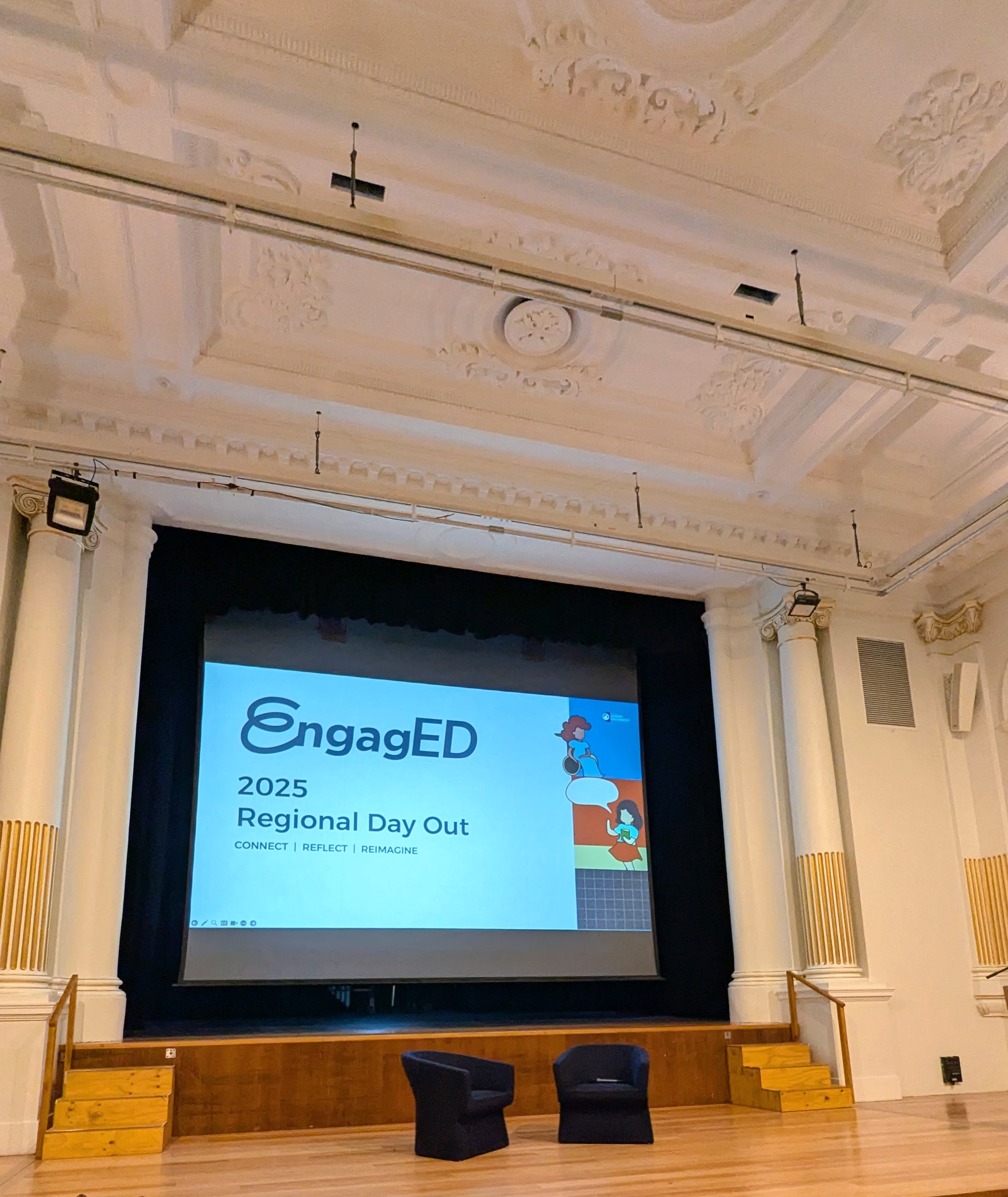
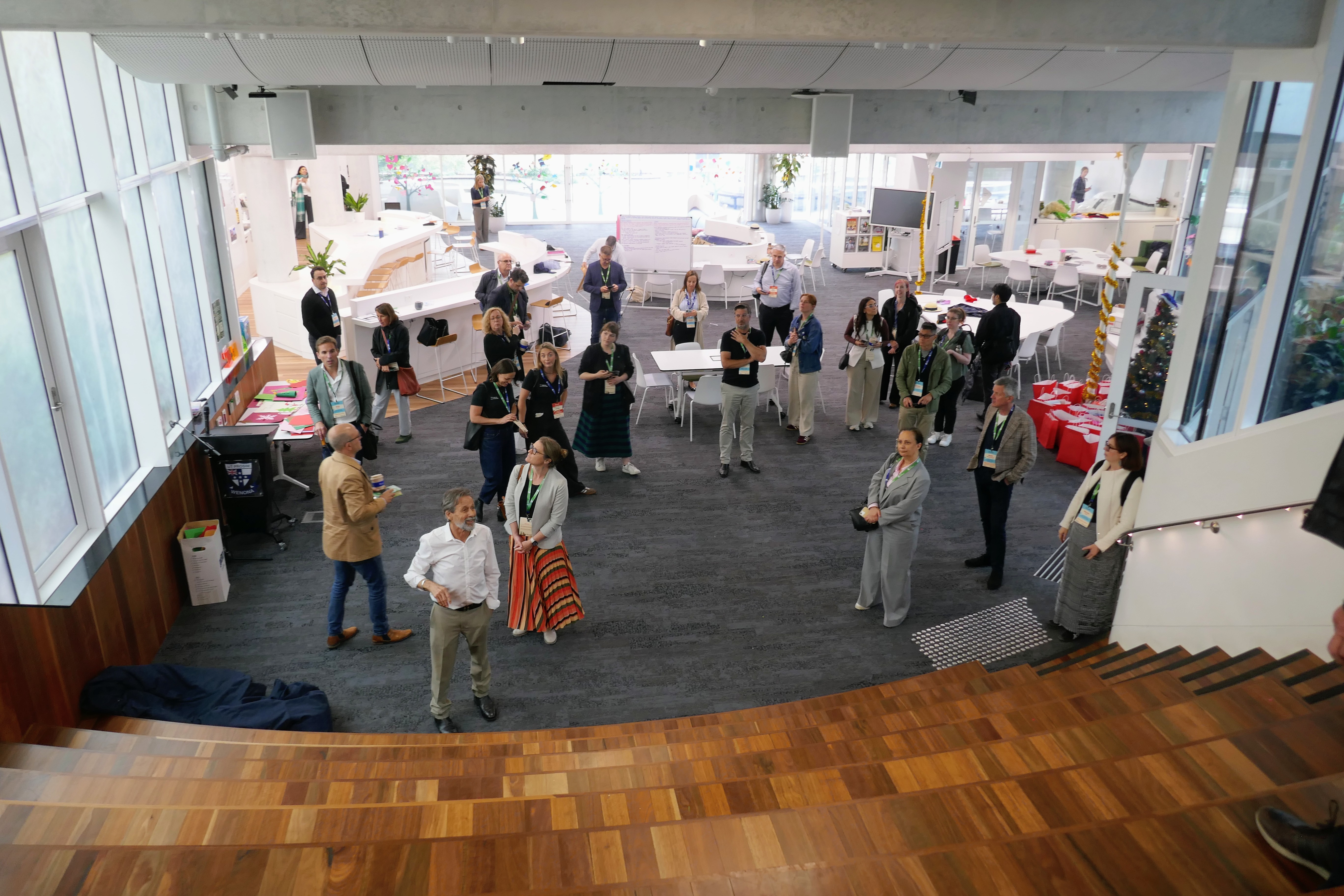
Last week I attended Learning Environments Australasia‘s Regional Day Out in Sydney centred on engaging young people in a constantly changing world. It was a fantastic setting for an inspiring day of learning amongst peers and strangers-now-friends. Although this is a busy time of year full of deadlines, it was so heartening to see and feel the rush of energy and excitement amongst my industry colleagues.
We started the morning in Wenona School’s beautifully restored Independent Theatre with our joyful MC Darren Cox setting the scene for the changing digital and physical landscape our young learners are finding themselves in. I wish I could share everything I learned in this inspirational day as I don’t think the summary really does it justice, but here we go.
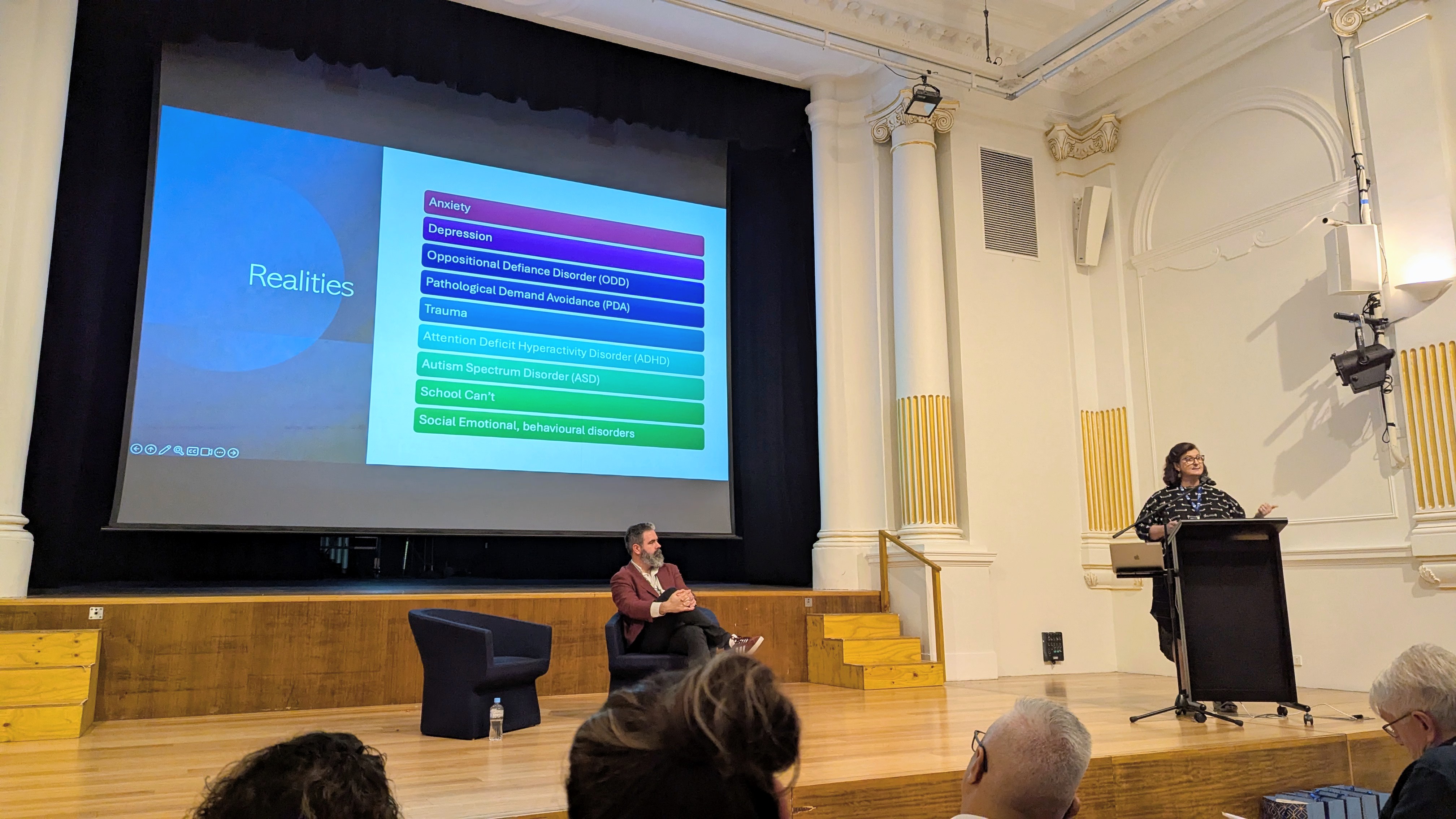

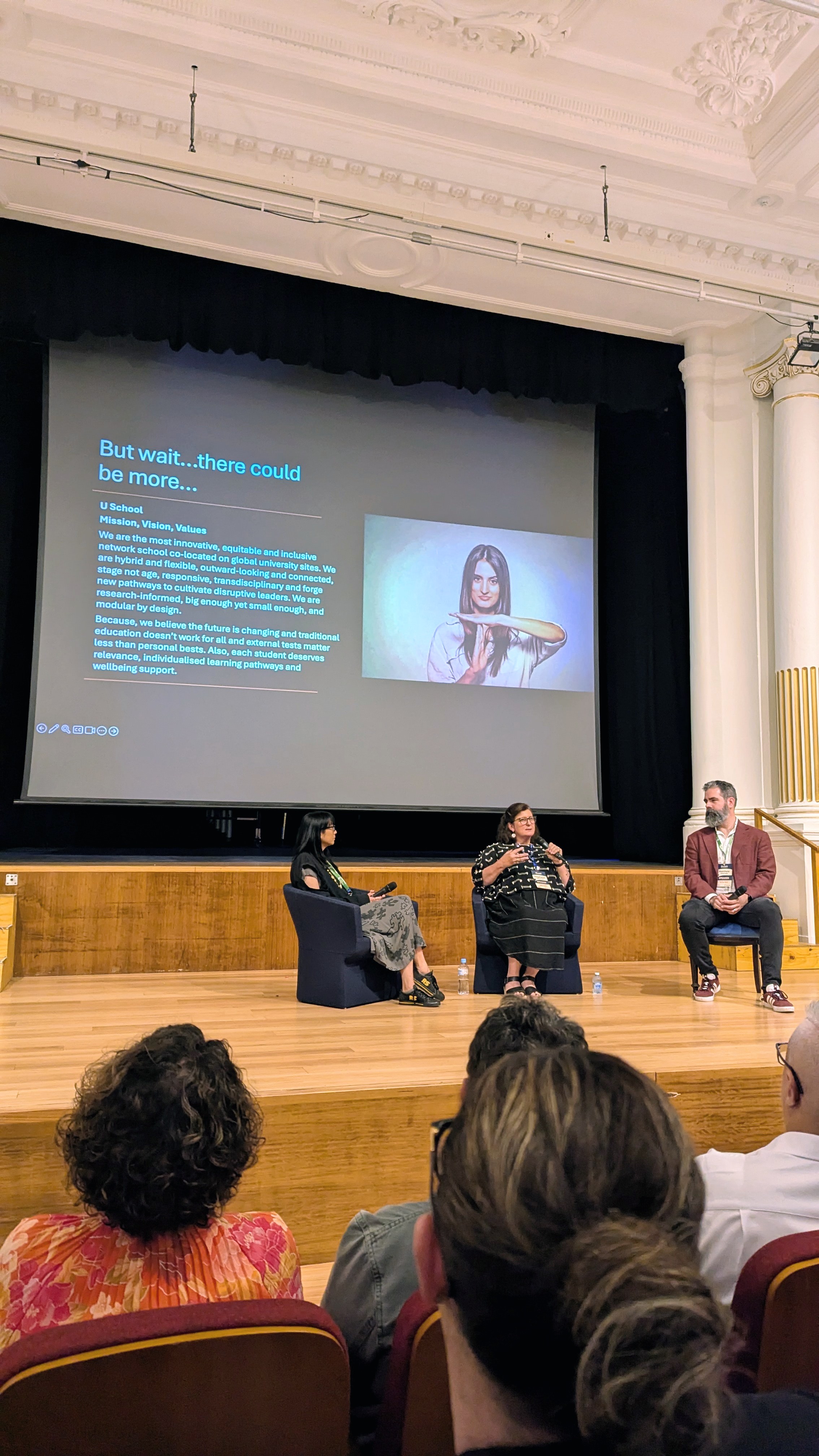
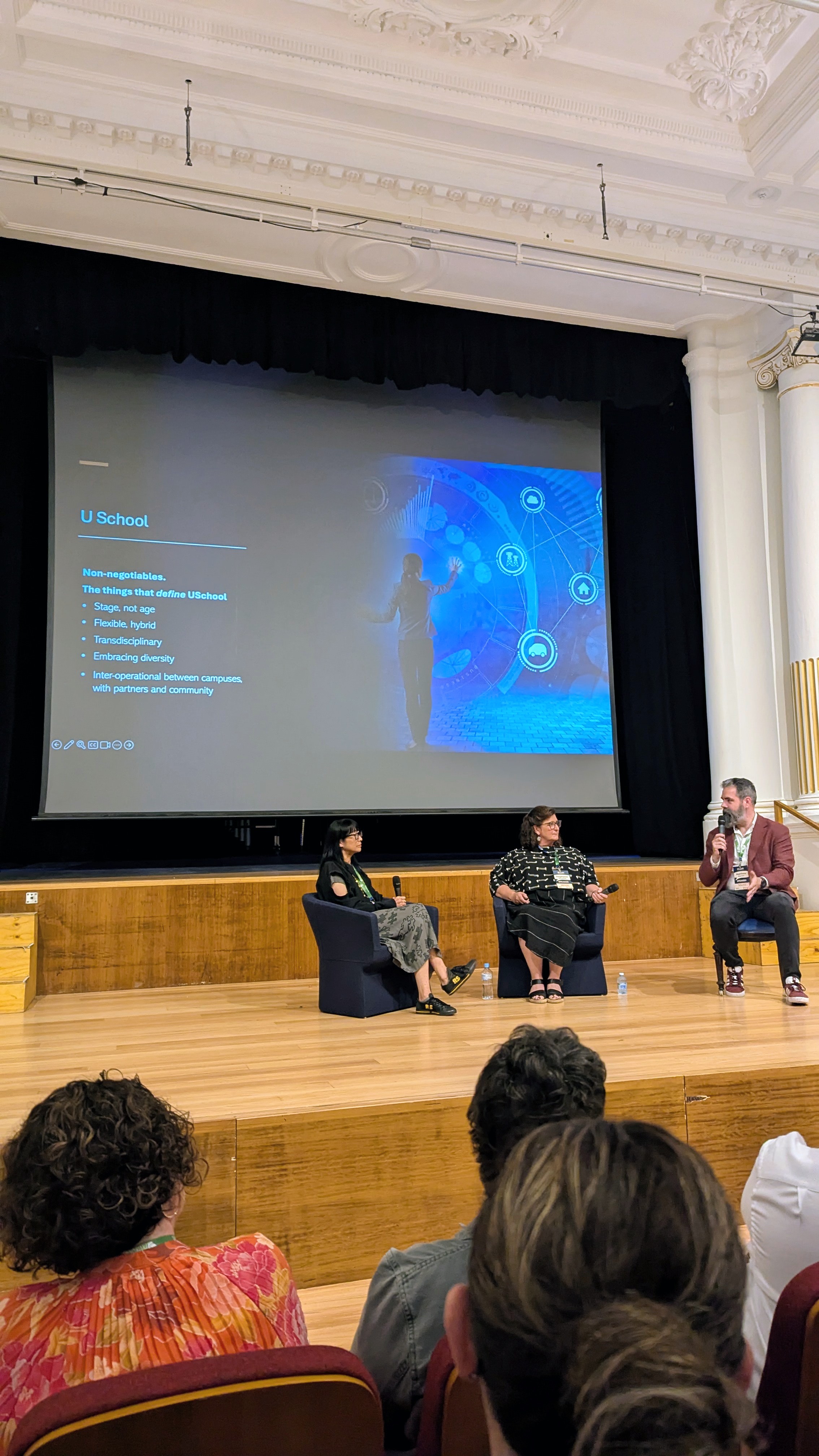


Matt Easterman and Stephanie McConnell shared the stage as the opening keynote, focusing on how we adapt to the increasing pressure of combining our digital and physical selves – where do our imaginations end and the AI inputs take over? Matt had some great student feedback from some recent surveys in NSW where students noted some big questions for us all to consider, like:
- Why should I try at anything when AI might wipe out my career?
- Why do we need schools when my teachers don’t have time like ChatGPT does?
- I want to be taught how to use AI to be responsible with it. Most of my teachers have no idea.
The increased usage of AI by students can’t be ignored and teachers / schools may be getting left behind. We all need to understand the implications of AI for our learning spaces, for our schools and for our work environments. Matt showed that while AI used to be used for generated ideas, exploring research and editing, its number one use now is therapy / companionship, followed closely by life organisation and finding life purpose. Using AI for the more human elements of our existence is changing the way students communicate, share and view the world, and our scaffolding services, including the learning environments that support students daily, need to reflect this new reality.
Stephanie McConnell reflected on the disconnect around the language we use about education where our education systems and media still refer to “outcomes-driven”, “benchmarks” and “standardise” while researchers and future thinkers are moving towards “co-agency”, “flourishing” and “transformative” learning models. While there is a need for our learning systems to be inclusive, trauma-informed and human-centred, unfortunately the easiest process can be to stay with what we’ve always done, leaving behind our students who are in a vastly different world to the one we grew up in. Steph shared recent NSW research that every classroom within NSW will have at least one trauma-affected student. Every classroom – its an amazing statistic. And if we can help that one student while helping all of them? Surely that is the goal of a well-functioning and robust education system.
Stephanie has a really valuable way of bringing together the physical learner profiles we should be encouraging (creativity, belonging, planetary connection, digital citizenship) and the physical spaces that can foster and support students to grow (eg connected, ethical tech spaces, makerspaces and studios, calm, trauma-informed design, and participatory reconfigurable spaces). She shared her ground-breaking Lindfield Learning Village learning characteristics, celebrating mindset and attitudes over skills, and then her transformative approach with the Edmund Rice Education Australia Flexible Schools to develop resilient and hopeful young people in an inclusive environment through common ground understanding of accountability and responsibility.
In an exciting development, Matt and Steph, together with education architect extraordinaire Fiona Young, then shared their combined vision for U School, a new innovative, equitable and inclusive network school planned for a co-located university site in Sydney. Exciting times ahead!
So that was our first energetic, hopeful and inspirational keynote. Following on from this first session was Georgina Blix sharing her important work on wellbeing and wellness (not to be interchanged!) while keeping optimism and hope for our future. With over half of NSW youth and middle-age respondents noted loneliness as a challenge, Georgina shared her practical Wellbeing Design Framework designed to not only provide a baseline of equity and inclusion, but to go beyond to nurture individual’s engagement, achievement and relationships. Georgina has compiled her research into a great journal ‘Design for Wellbeing’ available on their website. I liked her analysis that wellbeing is a construct much like the weather – lots of seemingly small elements coming together to create a context, and all needing to be balanced to get the right result. She also posed a great question we should keep in mind for student workshops – “Where do you feel most hopeful in this building?”
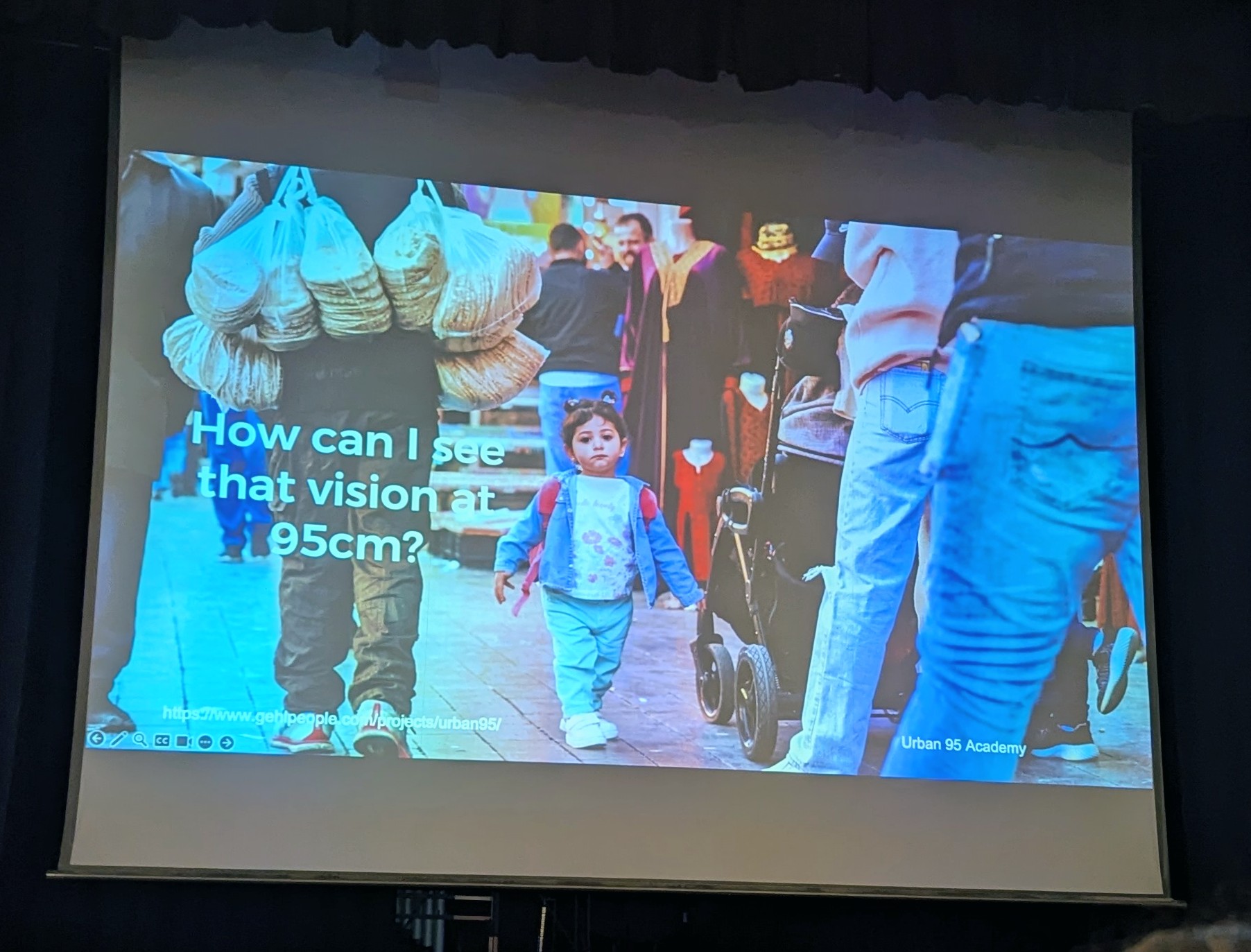
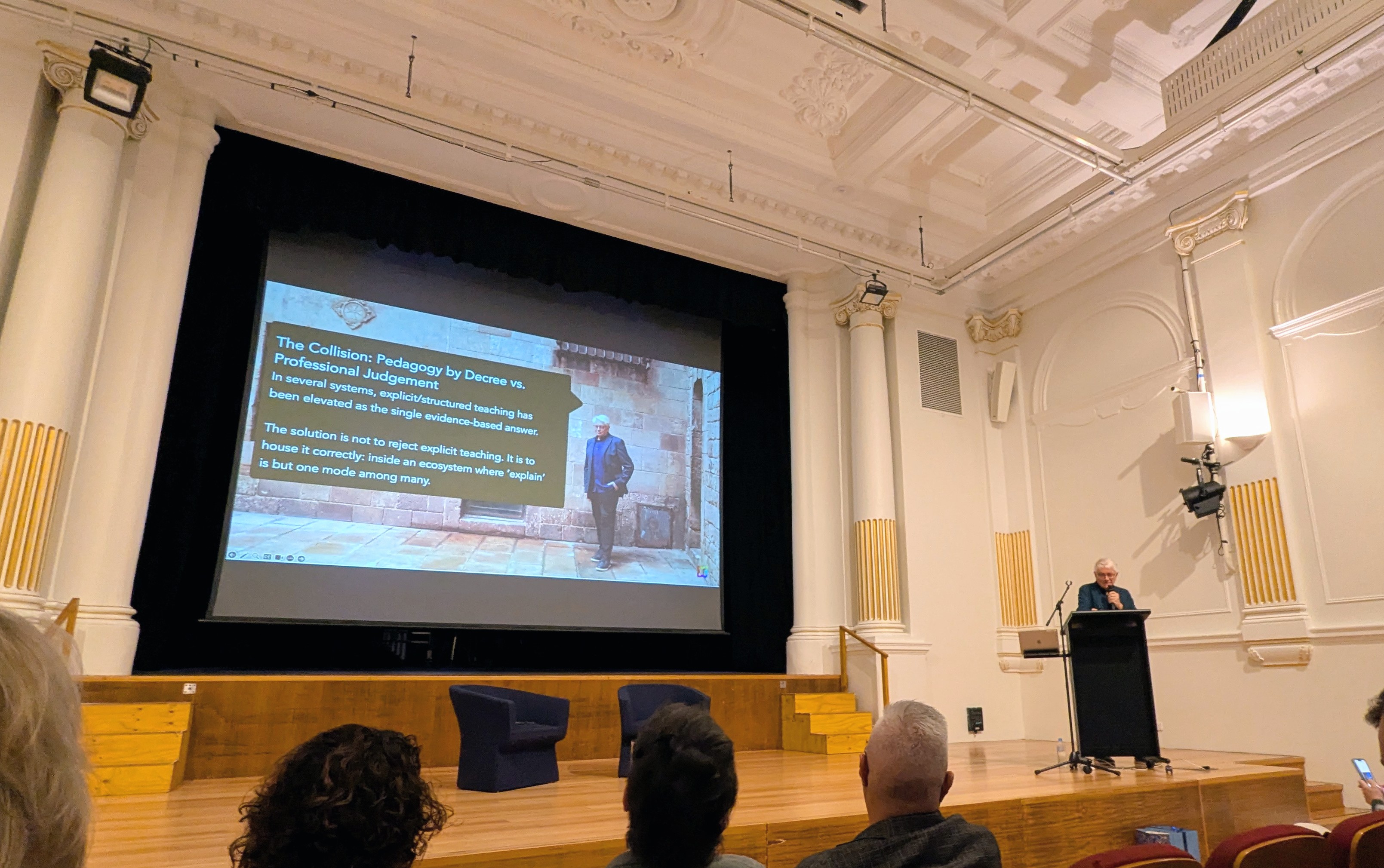
Rounding out our keynote speaker morning was the incredible Stephen Harris, hot off the plane from yet another international location where he is transforming learning with new technologies and new places. Stephen’s visionary work with the development of Learnlife in Barcelona has set up a new way of learning for dozens of families where learners are connected to the real world and develop lifelong learning in an environments with no assessments, no grades and no examinations.
Stephen encouraged us to think of a learning environment as a transdisciplinary, democratised human-centred ecosystem with the aspiration to “imagine schools as engines of capability, creativity, belonging and public value.” While he shared many provocations through the session that encouraged some great conversations amongst our seat-mates, I particularly liked these:
- Brief with verbs – design experiences, not rooms.
- Every metre must earn its keep: relationships per square metre, not seats per square metre.
- Flexibility isn’t a feature; it’s the operating systems.
- Stop building compliance; start building courage.
Stephen really gave us a lot to think about with his philosophy that design should be the vision you walk through – embedding your strategic vision and pedagogical planning into all the systems – including the built spaces – within your school to celebrate and support all students as individuals on their own learning journey.
While the morning had us sitting in awed inspiration with our keynote speakers, the afternoon had us out and about in the drizzly rain visiting some exceptional learning spaces in North Sydney.
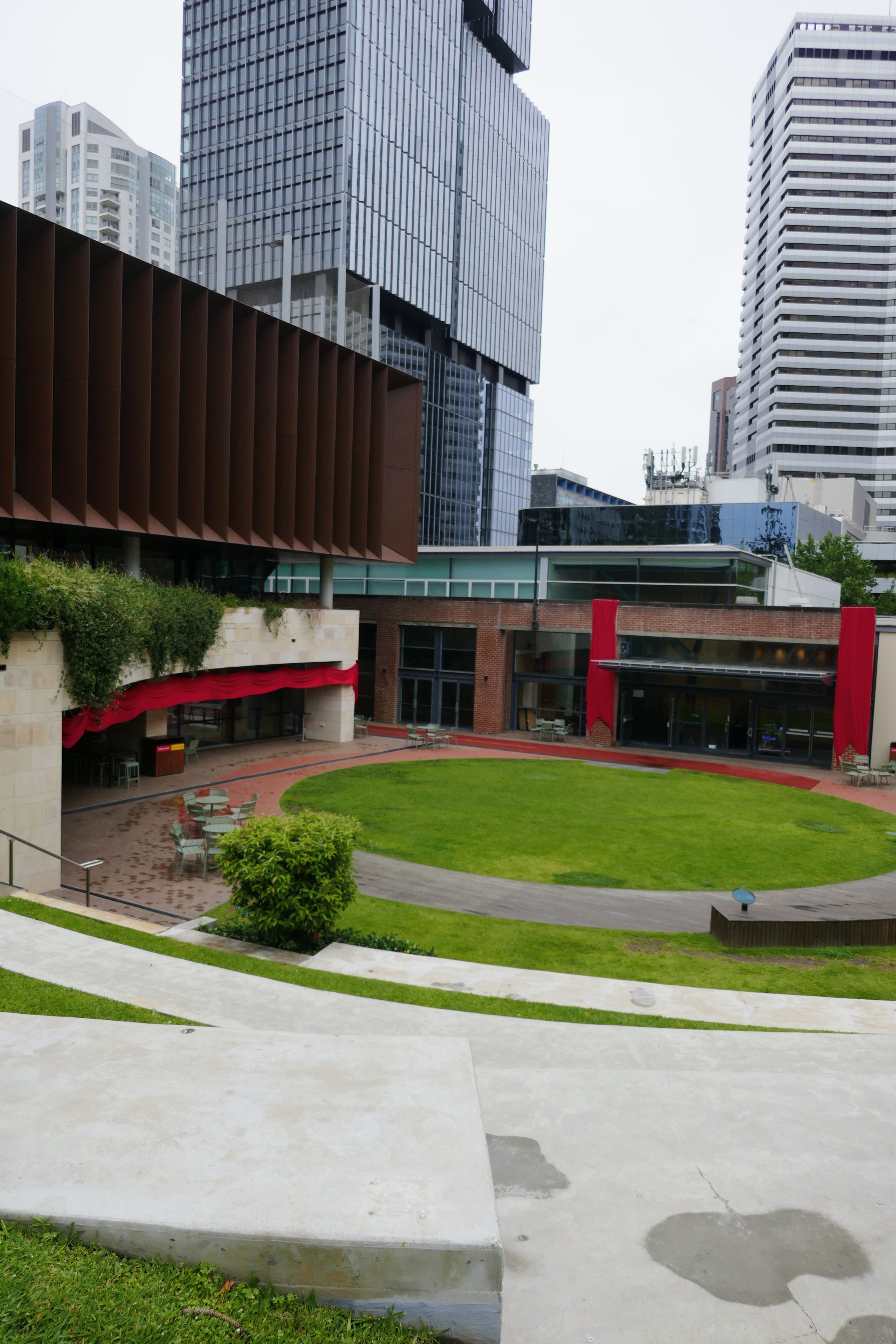
Our first visit was to the Athenaeum at Wenona by Tonkin Zulaikha Greer, bringing together a community of wellbeing around independent learning, scientific study, sports and recreation, hospitality and socialisation. The building houses so many different uses on an incredibly constrained site, plummeting 5 metres underground and deftly wedged between existing school buildings and the neighbouring houses.


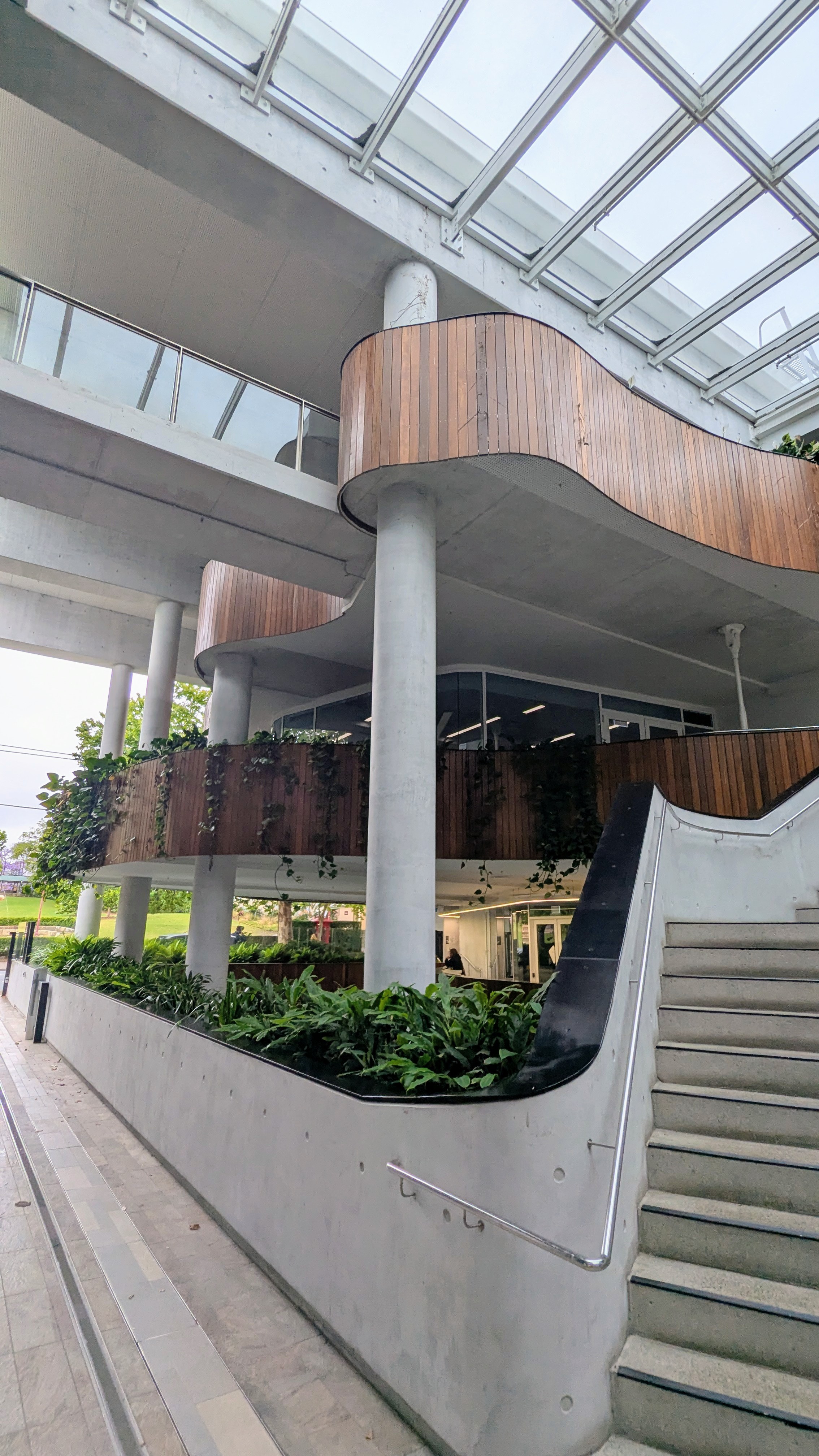
Given the subterranean construction and the height of surrounding buildings, the new centre had a lovely sense of light amongst its spaces, with even the lower level swimming pool receiving an abundance of sunlight from above. The beautiful clean lines of the exposed concrete structure meshed the functionality of the superstructure and the beauty of neatly formed concrete – it was a masterstroke to see how carefully this structure had been handled and considered.


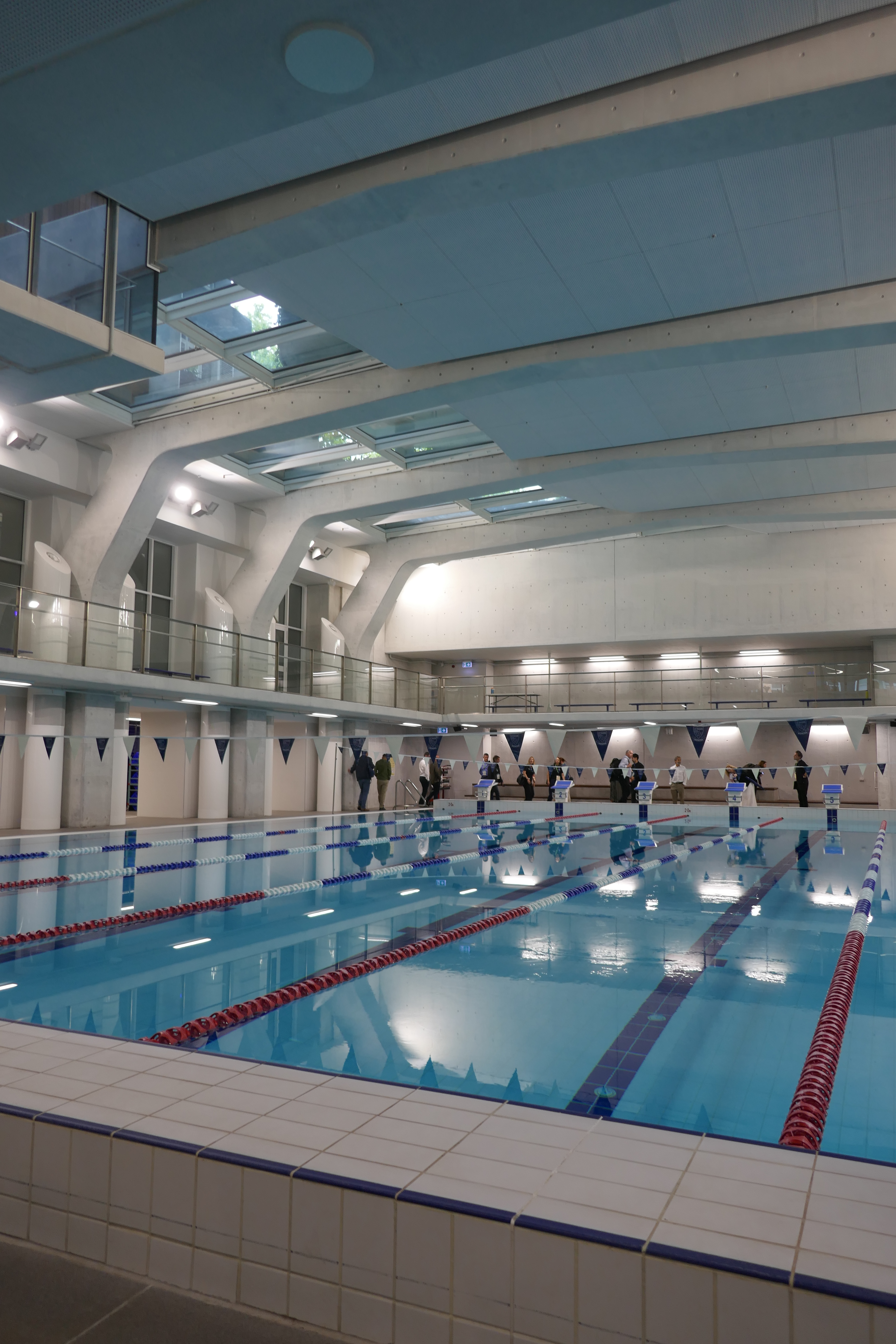
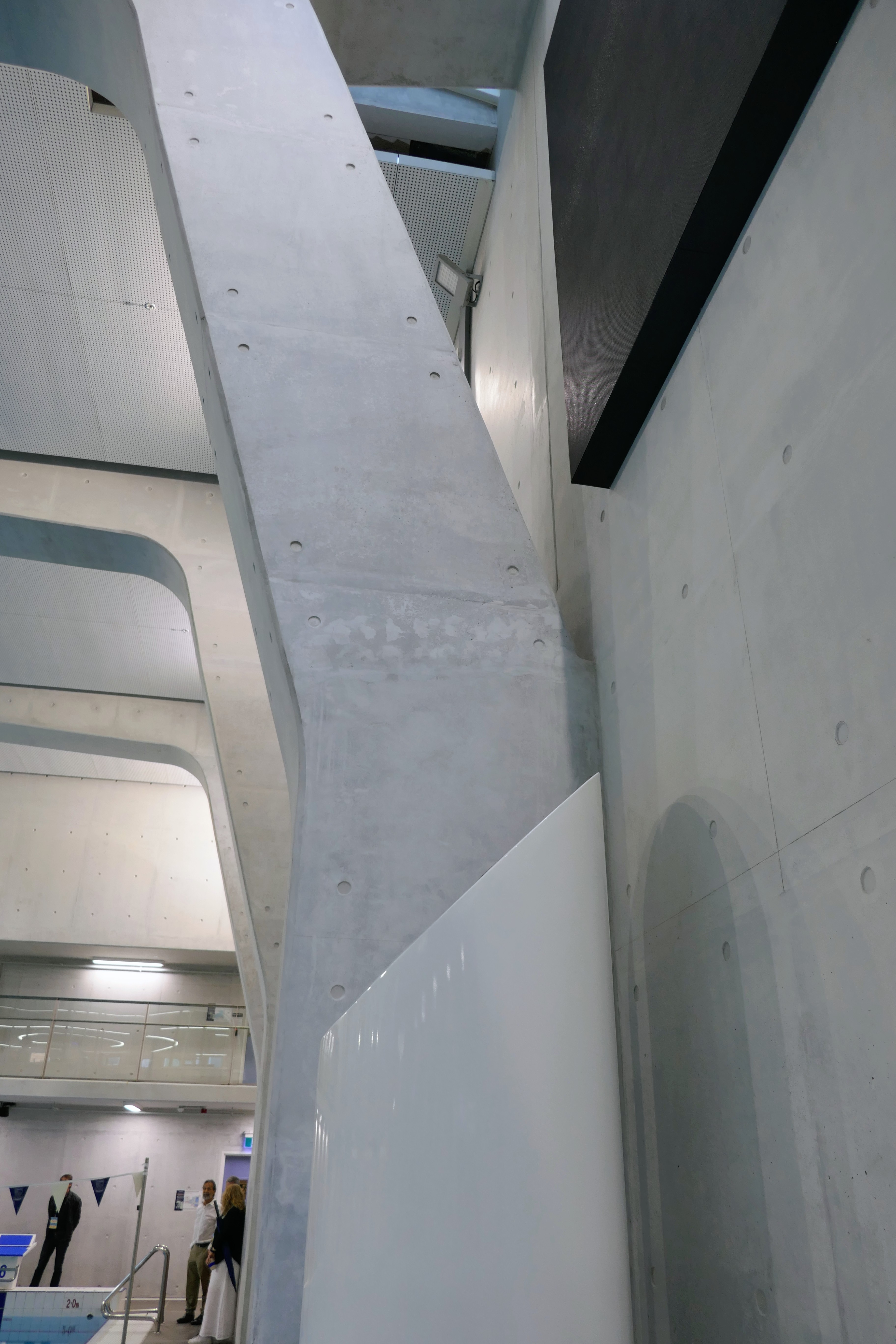
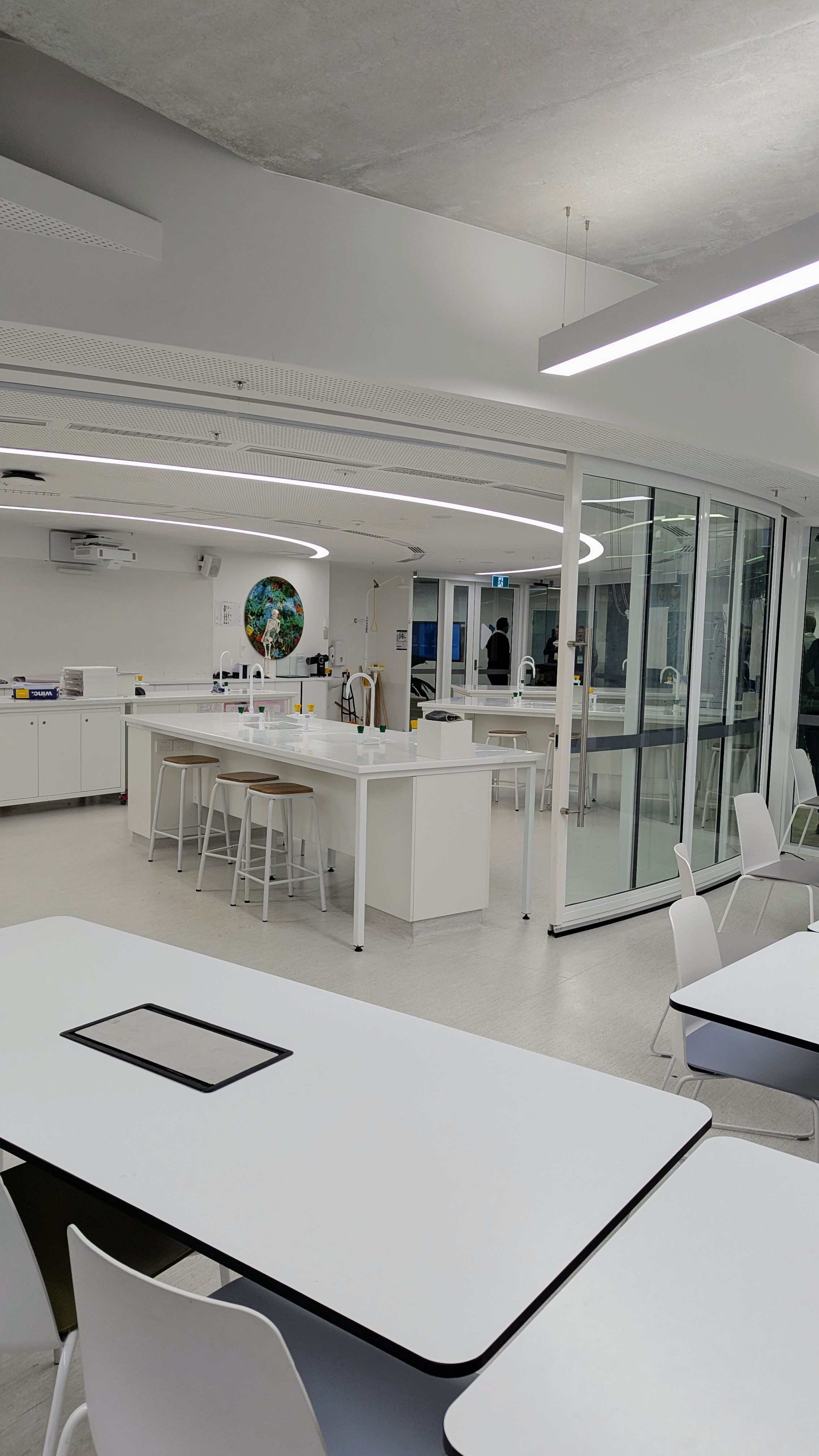
The science labs on the upper floor were a really interesting design, with a pair of semicircular labs each opening up to various sized theory spaces either side. Each of the four theory labs on this floor are differently sized and break out to a curved walkway which is set back to bring in the sun to the pool beneath. Across the central outdoor spine connecting the entrance on Miller Street with the rest of the campus, is the Hospitality kitchen with large tilt doors out to an open paved terrace. This bringing together of science and hospitality and enquiry along the public lane reminded me of a town square, celebrating learning and bringing together diverse views.
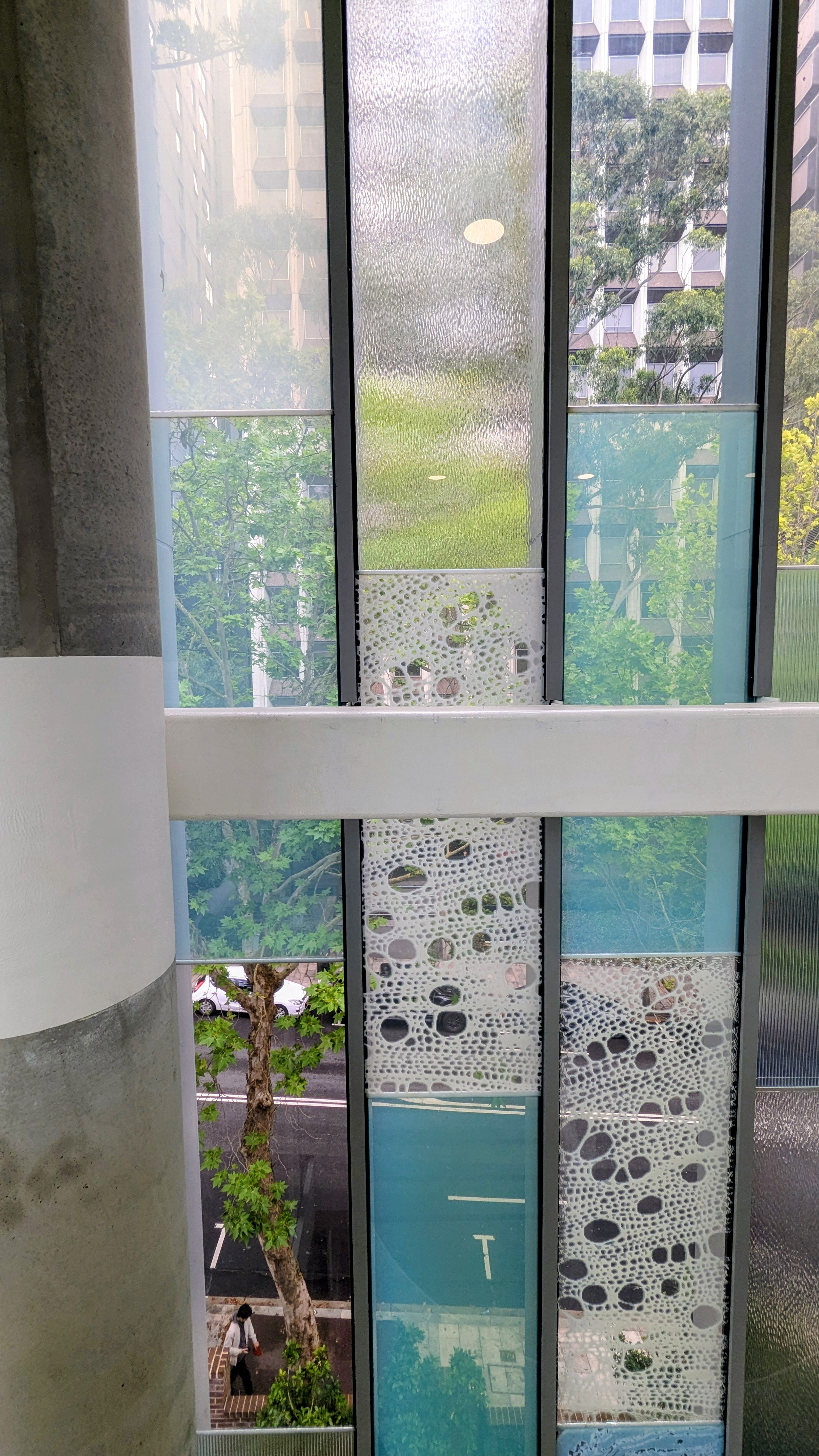
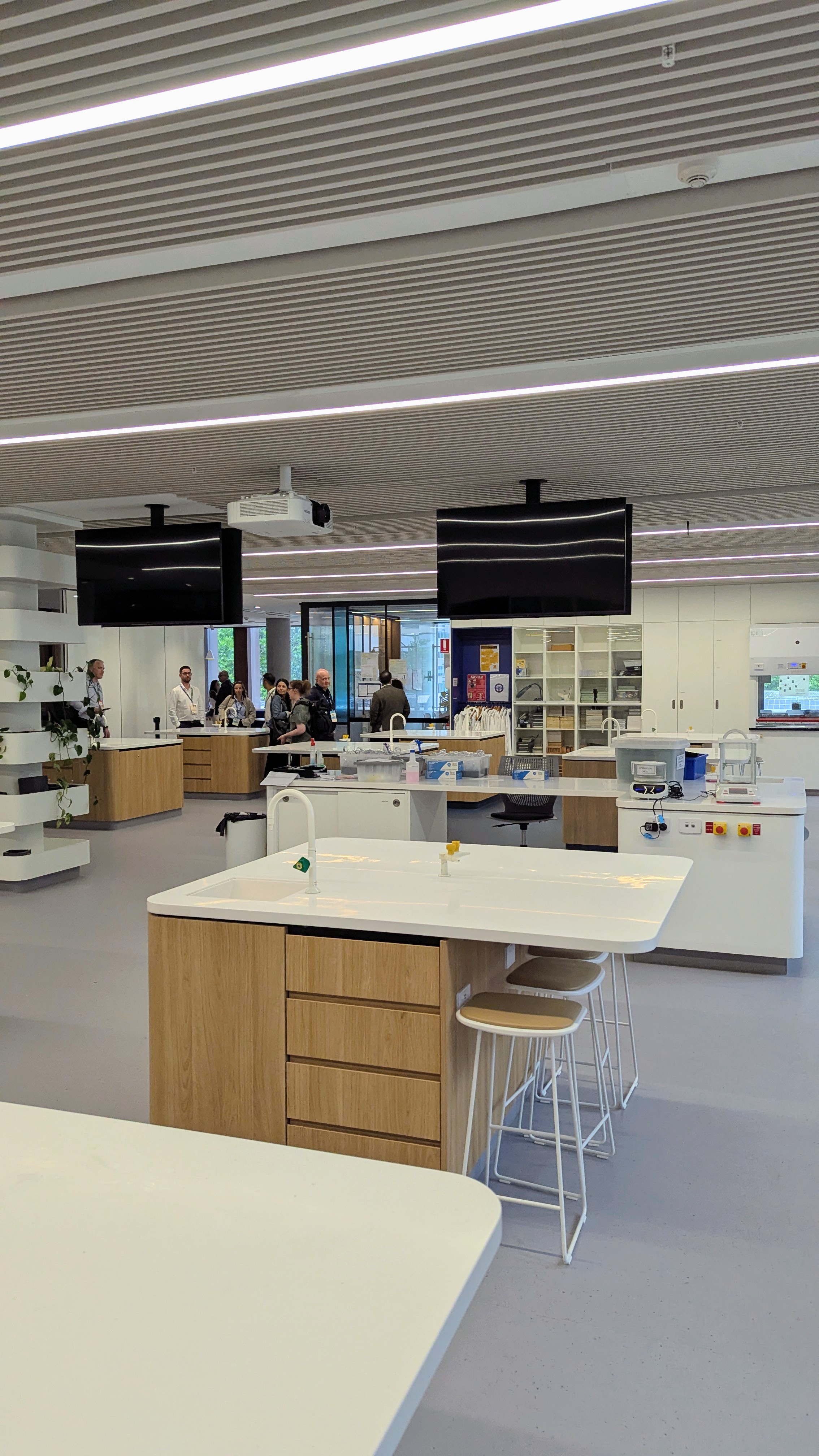
Our second visit of the day was to the Scientia Terrace at Monte Sant’ Angelo Mercy College by Hayball. Another building packing a punch over multiple levels on a really tight site, it was great to see this award-winning building in action. The custom-designed joinery was incredible and added to the tailored nature of the spaces, with places for scientific display and inquiry, collaboration and individual study, and presentation and creation. An abundance of screens and whiteboards for working out celebrated learning on display across the building.
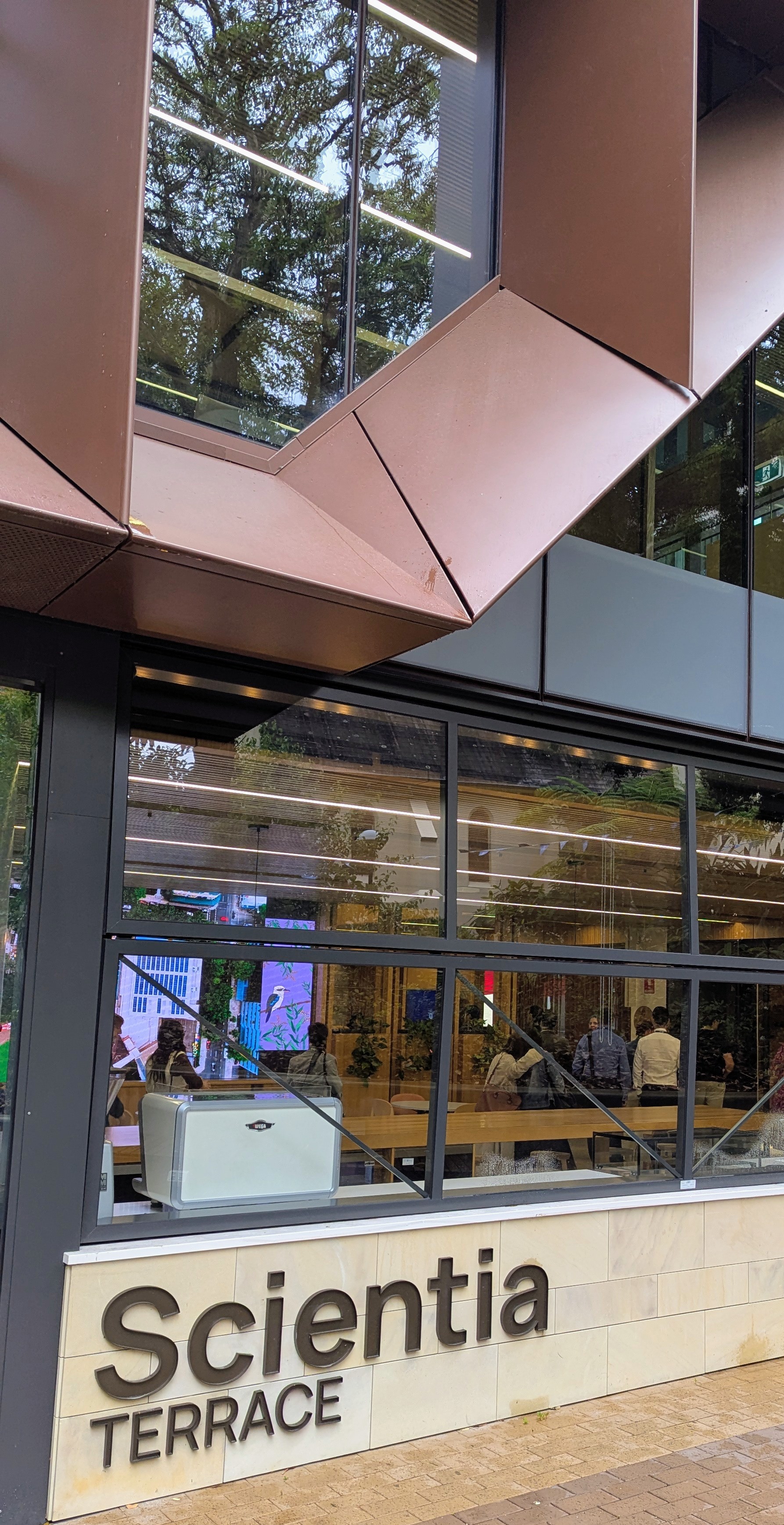

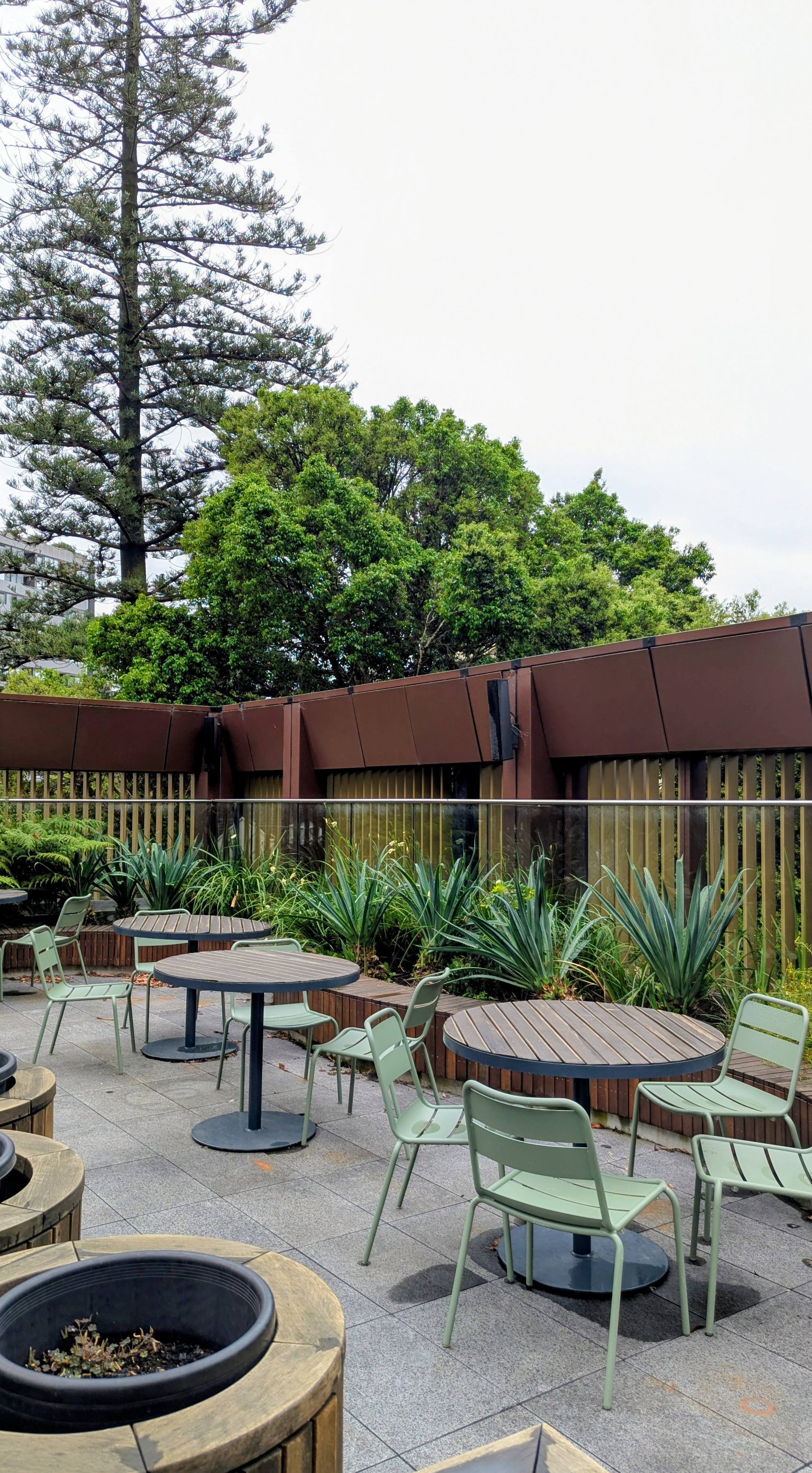
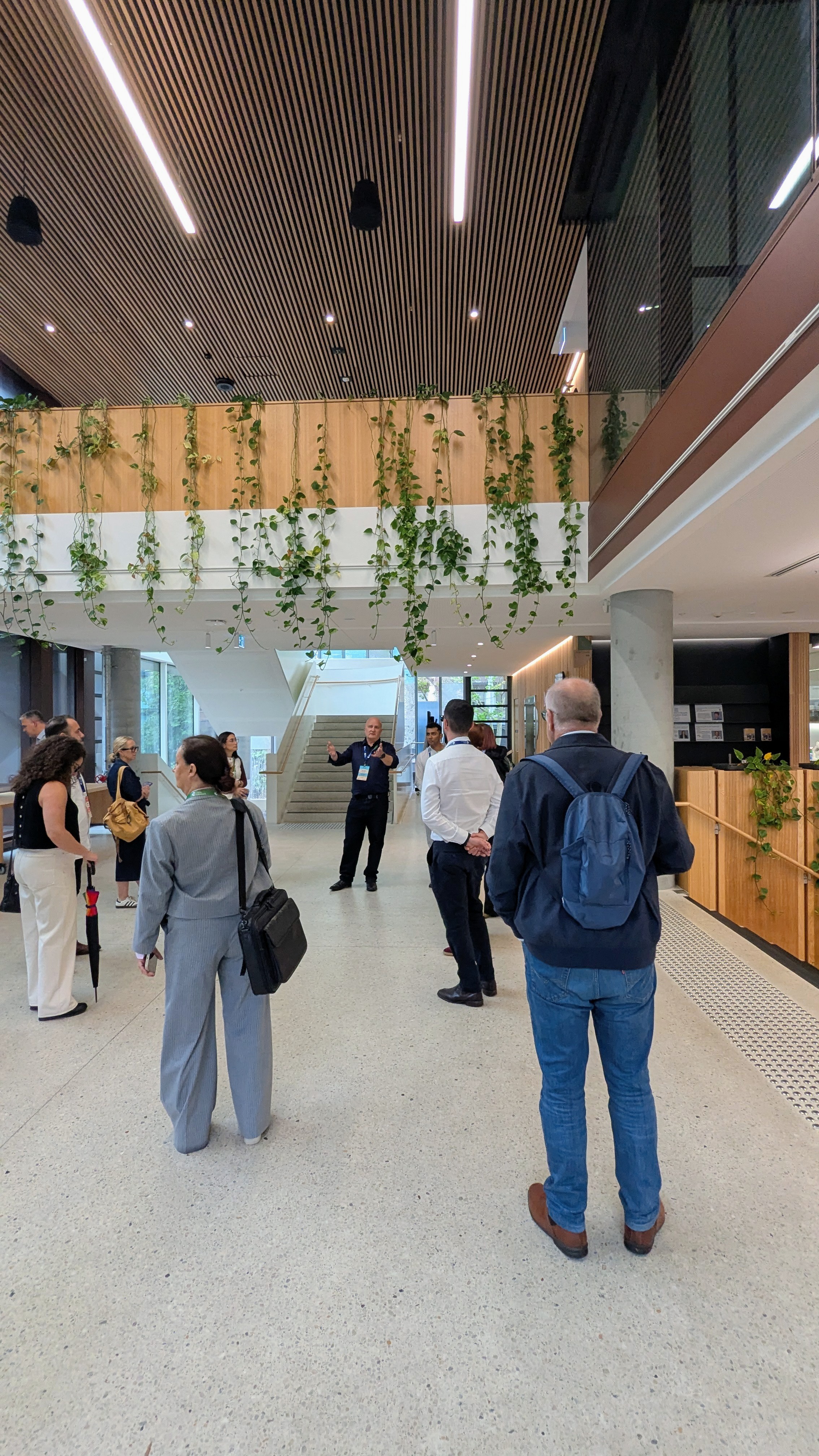

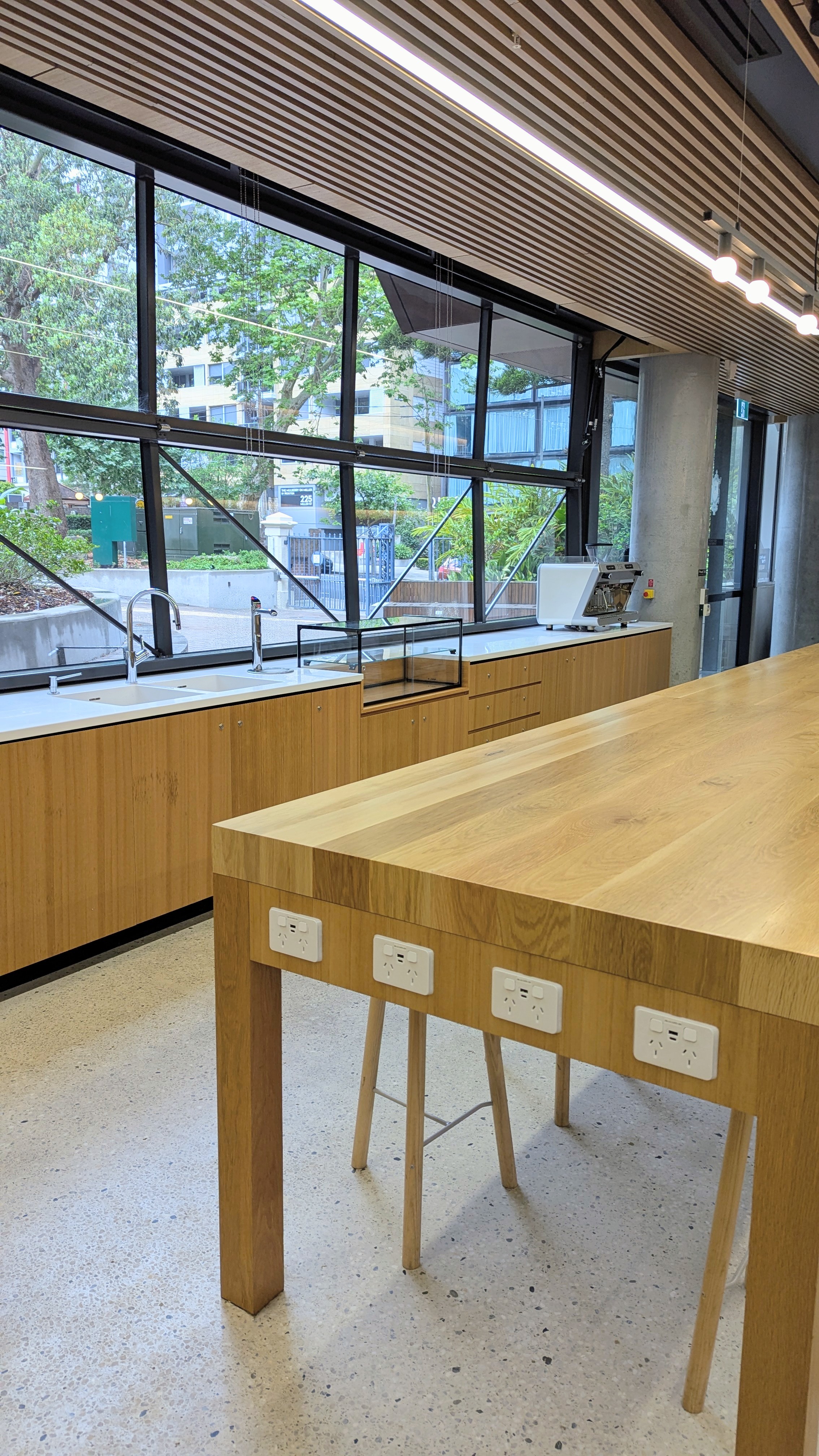
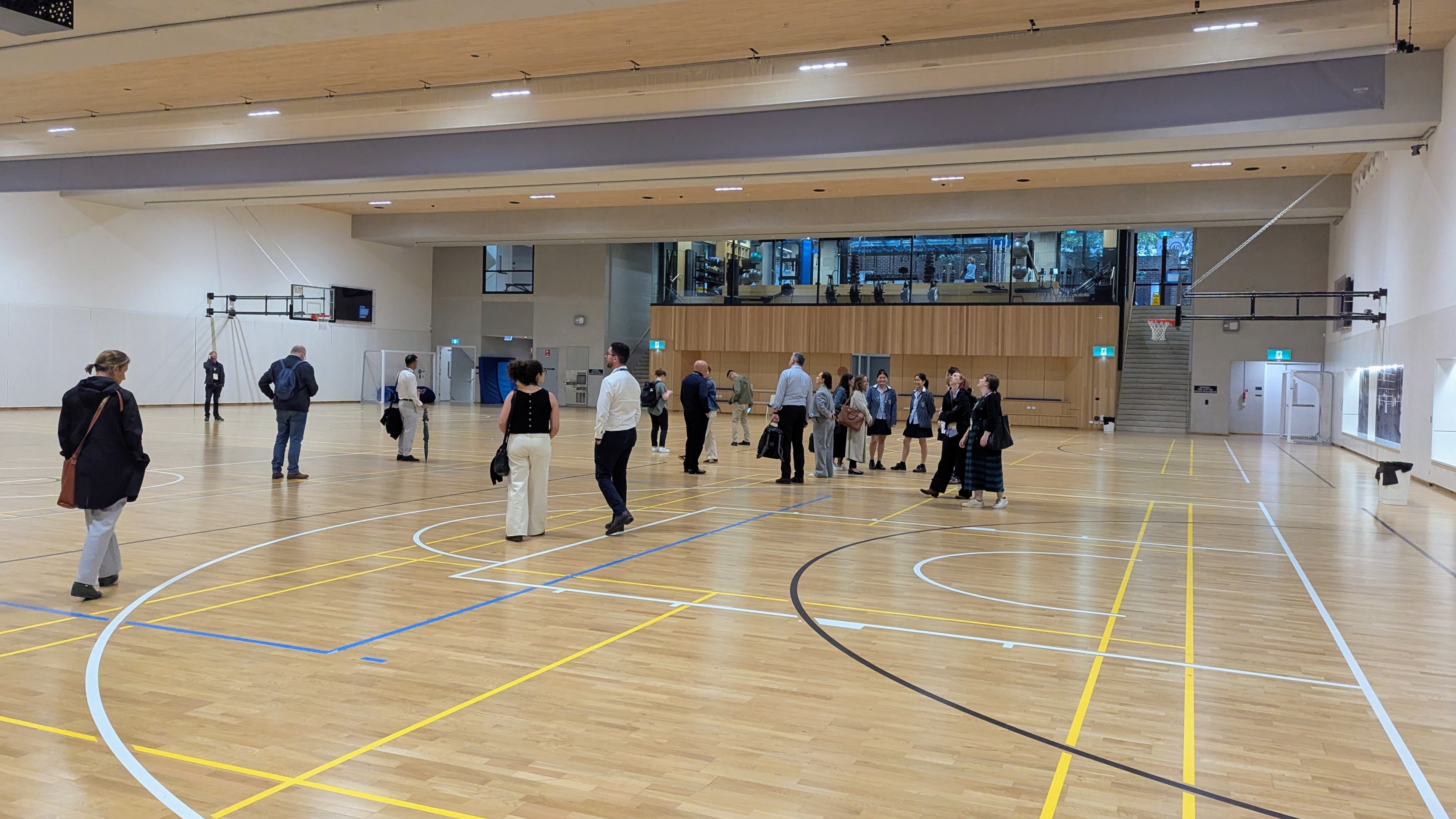
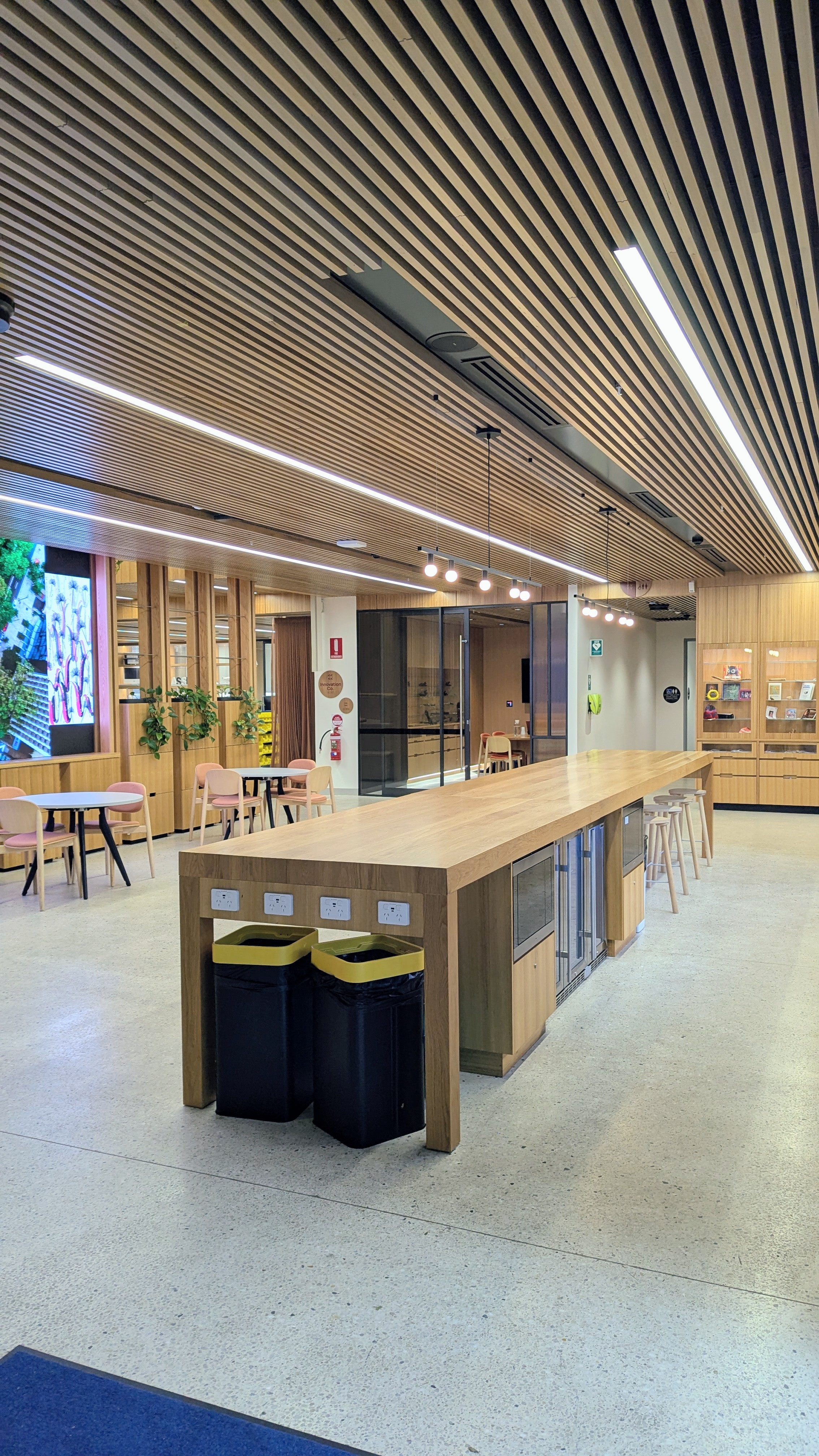


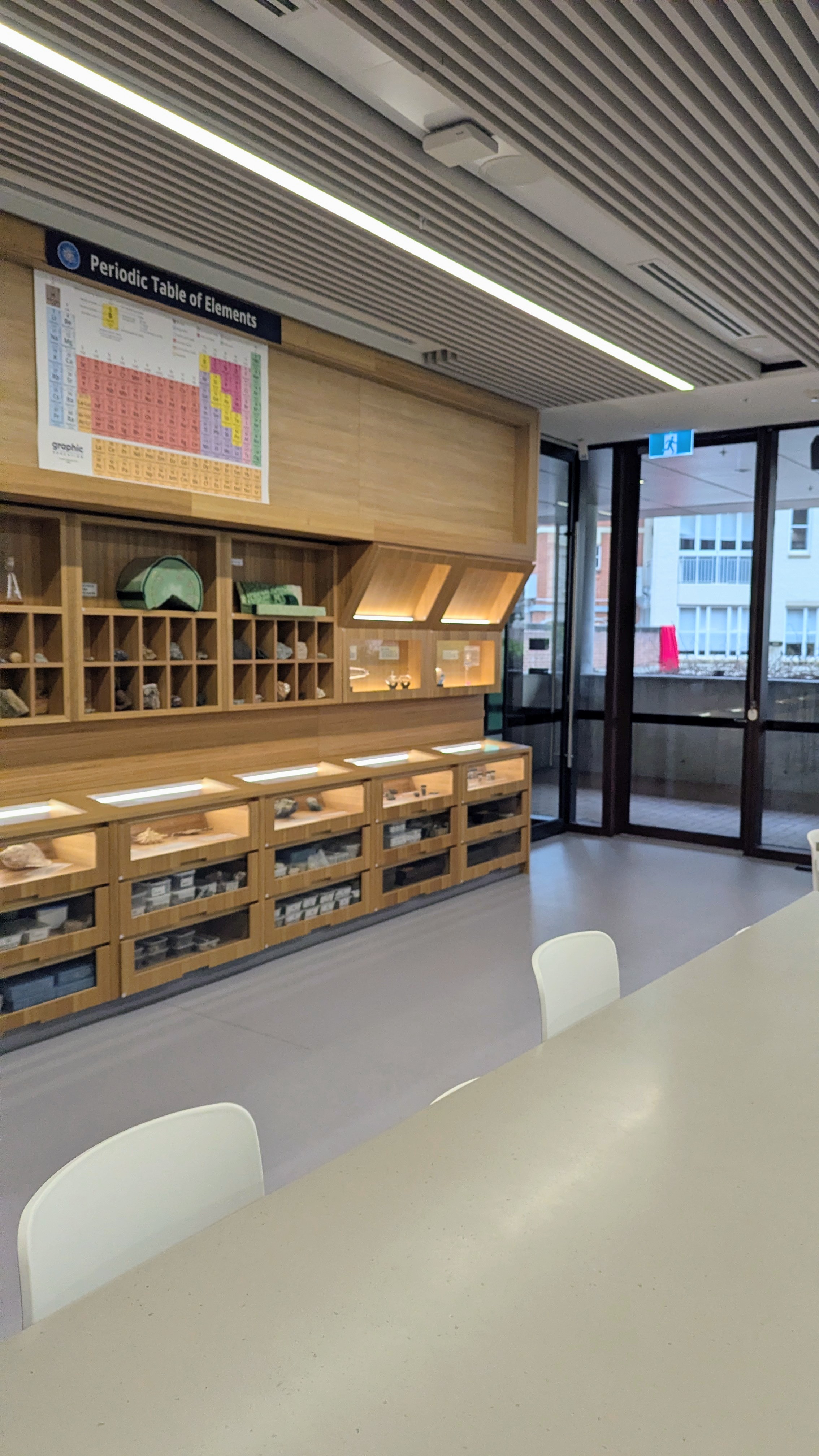
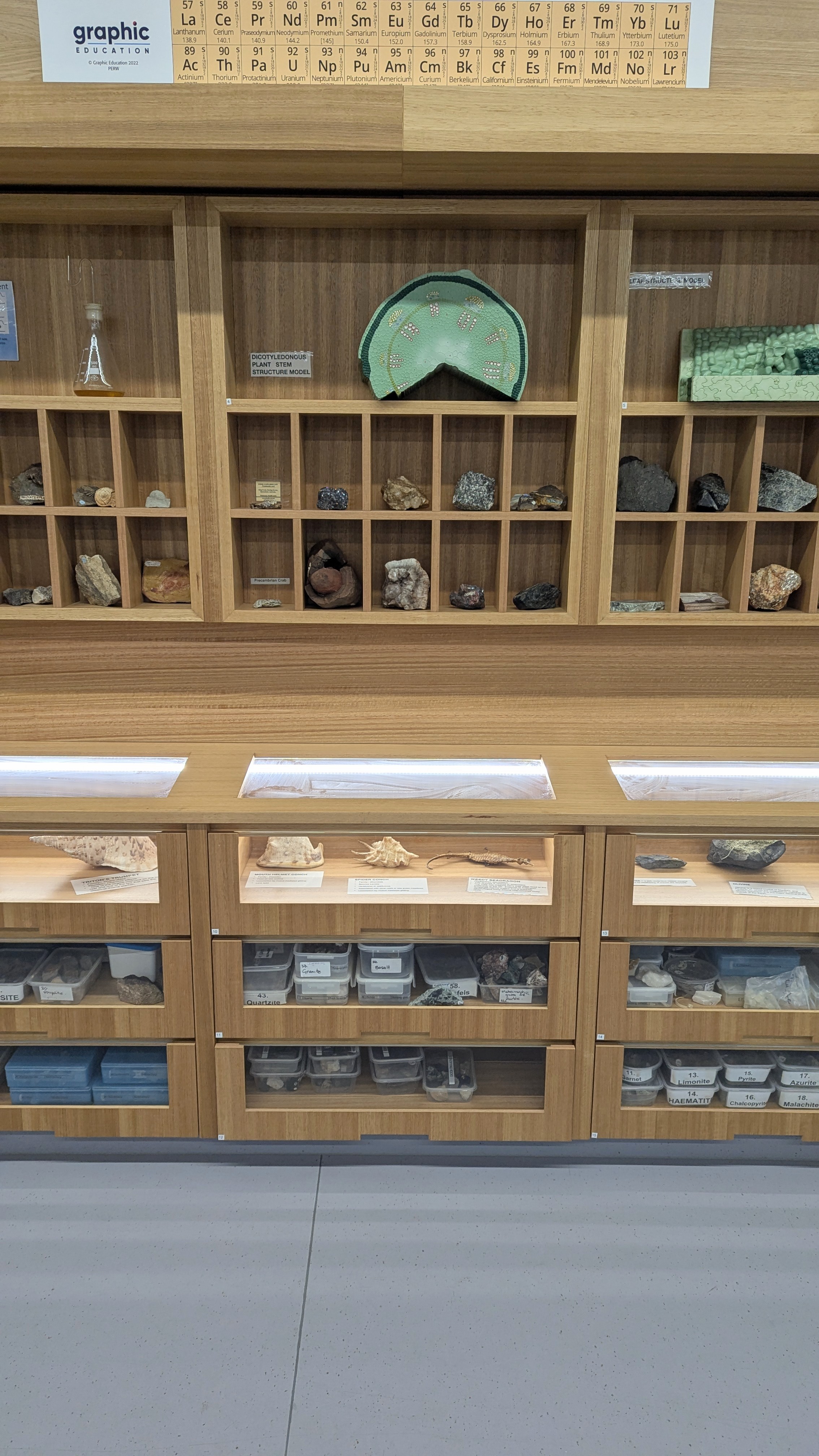

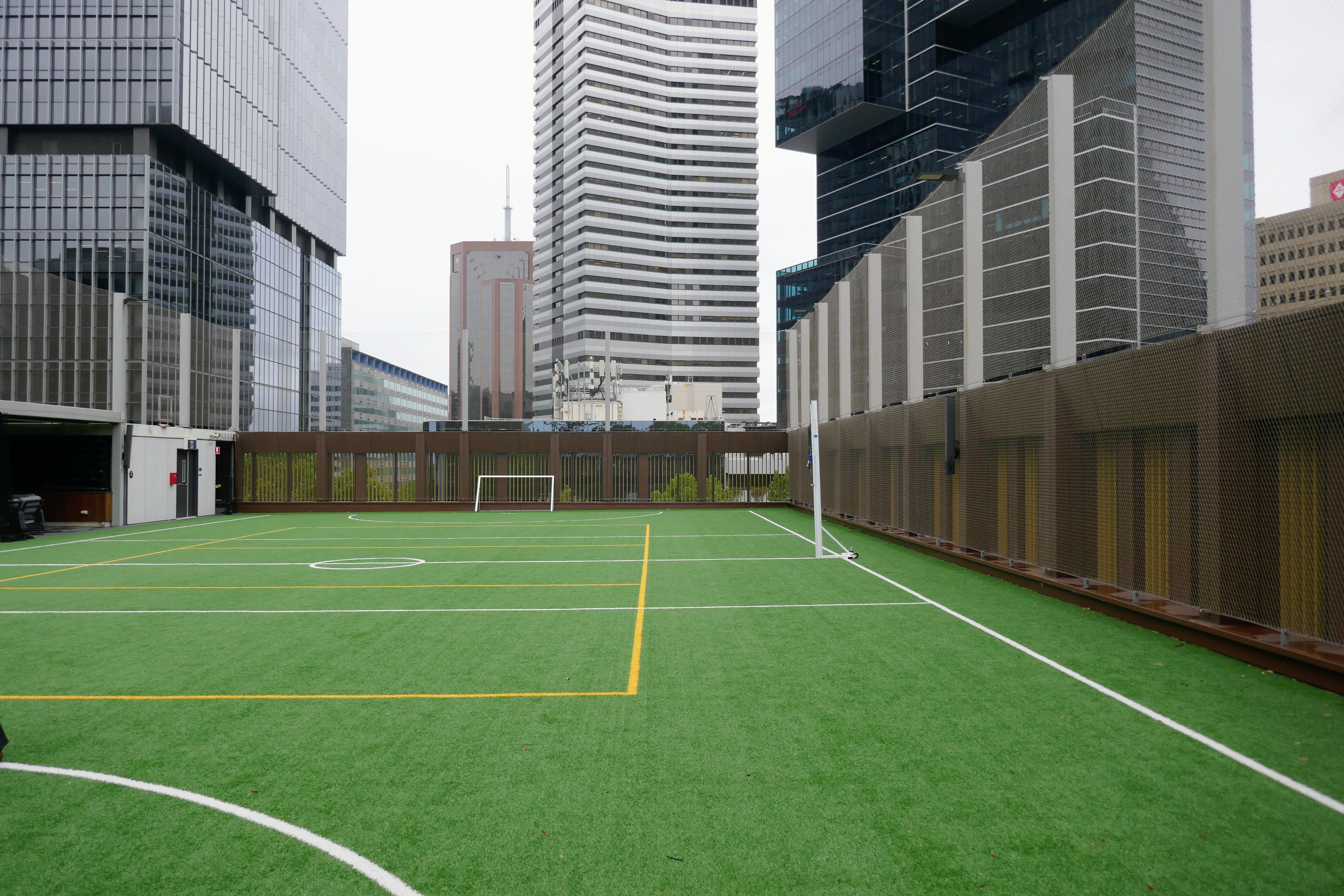
Spread across five stories, the learning spaces are sandwiched between an open air sports court on the rooftop, and a covered timber-lined in-ground sports court on the lowest level. Although being completely submerged, this space still had an effective sense of light borrowed through the gym above. I really liked the wall artwork, proudly showing enlarged images of previous students playing sports across the campus. It was a great way to connect the legacy with the future.
Between the two sports decks sat a number of flexible and innovative learning spaces, with the entry level dedicated to innovation, making, display, presentation and experimentation. While we were touring the space, and during our networking session after, the makerspace was in full use by students, creating and learning individually and with a staff mentor as needed, while the presentation space immediately outside was comfortable and seamlessly tech-driven while also being adaptable. Easily amused as we are, a lot of the architects were fascinated by the moveable TV screen joinery panel between these spaces – such a clever idea to not let electronics dictate fixed spaces.
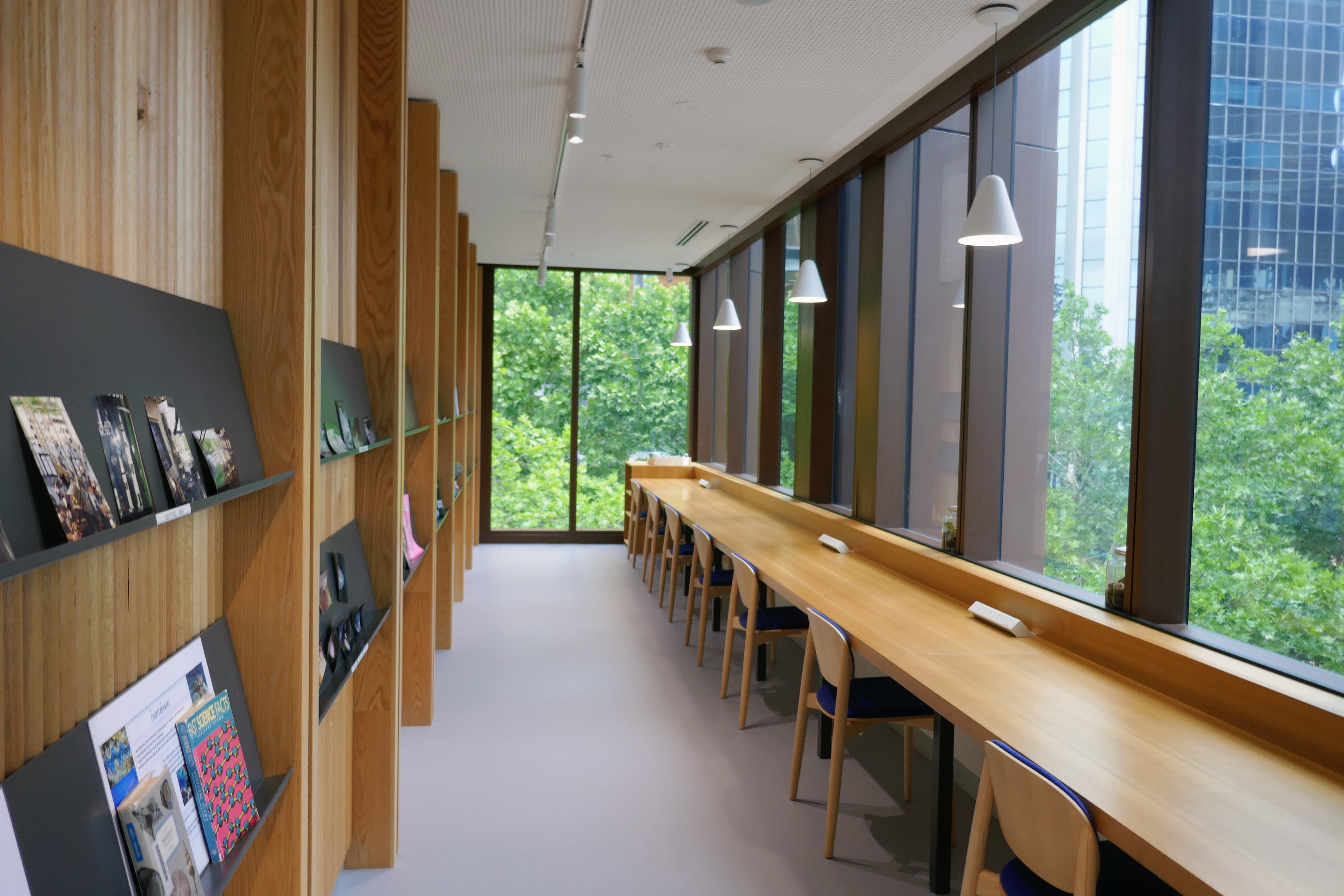

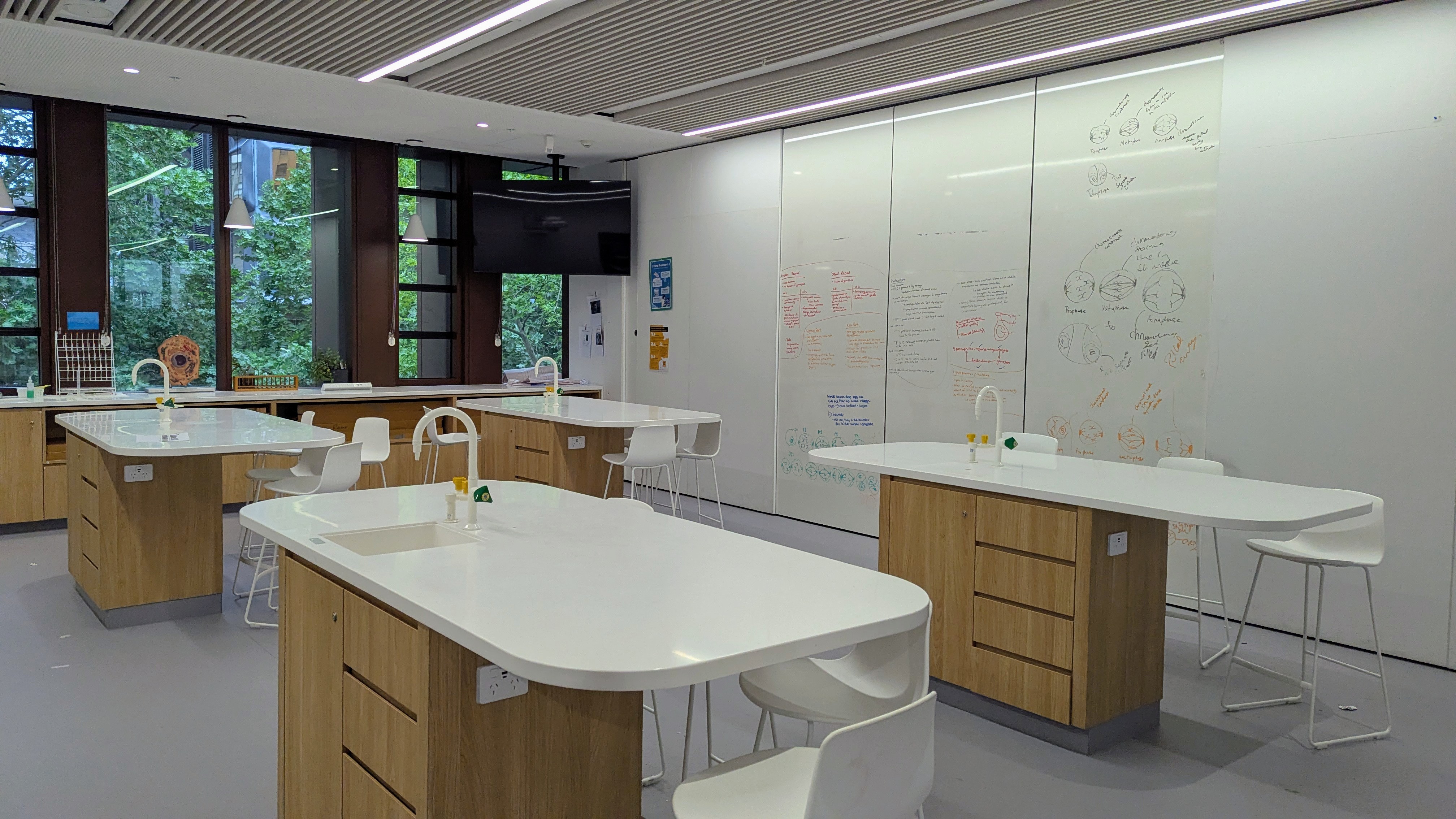
The two science levels had a mixture of theory spaces and prac spaces, on either side of a wide transition space, with different configurations possible for different kinds of work. The large windows to each room at treetop level enhanced the sense of light across the rooms, and although we were there on a slightly rainy dreary day, the connection to the outdoors was fantastic. There was a lot to like about this building and the opportunities for learning and growth you can imagine it brings about.
All in all, another fantastic day of learning from the LEA crew. Special thanks to the incredible MC Darren Cox, plus the event committee Daniel Smith, Jess Wang, Kristine Piggford, Holly de Jong, Daniel Levitt, Simone Carmody, John Ward, Jo Simmons, Christine Looyschelder, Mrugaja Karandikar and Felicity Lewis. Well done all!
 Happy Work Life Balance
Leave a comment